
How Fast Deep Cleaning Works Without Cutting Corners
Key Takeaways
- Fast deep cleaning relies on planning, sequencing, and access control rather than rushing tasks.
- Drying time and method choice directly affect how quickly spaces can reopen.
- Integrating cleaning and disinfecting reduces downtime and repeated work.
- Clear team coordination and defined zones prevent delays and rework.
- Deep cleaning companies achieve speed by delivering readiness, not just visual cleanliness.
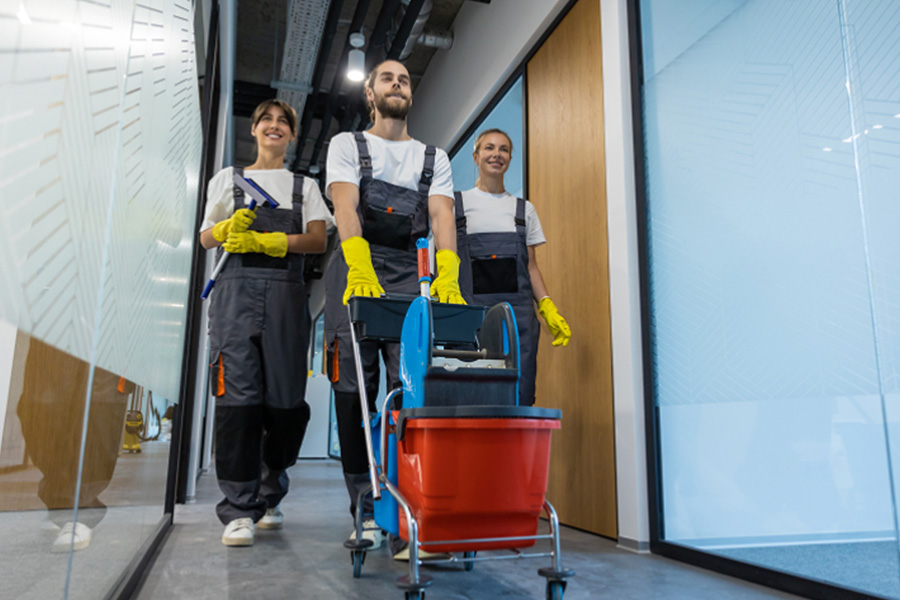
Urgent cleaning situations usually arise when operations cannot afford long downtime. Facilities may need areas cleaned, disinfected, and ready for use within narrow windows following contamination, shutdowns, or operational disruptions. In these moments, speed is often mistaken for rushing, especially when surfaces look clean quickly. In practice, deep cleaning and disinfecting services achieve efficiency by reducing rework, delays, and idle time rather than compressing steps. Deep cleaning companies that work well under pressure focus on sequencing tasks so spaces move steadily toward readiness instead of cycling back for corrections. Knowing how this efficiency is constructed helps to explain why planning is more important for quick results than speed.
1. Speed Begins Before Teams Arrive
Fast turnaround depends on decisions made before any equipment enters the site. Deep cleaning and disinfecting services begin with a rapid assessment to understand contamination scope, access limits, and safety constraints. When deep cleaning companies skip this stage, teams often lose time adjusting methods mid-process. Early clarity allows the right tools, chemicals, and personnel to be deployed immediately. Preparation reduces interruptions that slow work later.
2. Movement Is Controlled to Prevent Rework
Unstructured movement wastes time during cleaning operations. Deep cleaning and disinfecting services divide spaces into controlled zones, so treated areas remain protected as work progresses. Deep cleaning companies rely on this structure to prevent cross-contamination and repeated cleaning. By managing how people and equipment move through the site, multiple tasks can proceed in parallel rather than waiting on each other. This coordination shortens overall timelines without sacrificing quality.
3. Cleaning Methods Are Chosen for Turnaround
Method choice directly affects how quickly spaces can reopen. Deep cleaning and disinfecting services select techniques based on surface type, contamination level, and required dwell time. Deep cleaning businesses steer clear of techniques that appear successful at first but necessitate repeated passes or prolonged drying. When technique matches conditions, progress remains steady instead of stalling mid-operation. Method selection prevents time loss caused by incompatible approaches.
4. Equipment Reduces Manual Bottlenecks
Speed is limited when work relies too heavily on manual repetition. Deep cleaning and disinfecting services use equipment designed to cover large areas while maintaining control and consistency. Deep cleaning companies depend on tools that reduce fatigue and variability across teams. Efficient equipment allows output to scale without slowing pace. This consistency keeps schedules predictable.
5. Team Roles Are Defined by Sequence
When roles overlap, time is lost coordinating on the spot. Deep cleaning and disinfecting services assign responsibilities based on task order rather than proximity. Deep cleaning companies coordinate teams so one stage hands off cleanly to the next. This structure prevents idle time and duplicated effort. Defined roles keep momentum intact under tight schedules.
6. Cleaning and Disinfecting Progress Together
Separating cleaning from disinfecting creates delays between stages. Deep cleaning and disinfecting services integrate both steps into a continuous workflow. Deep cleaning companies move surfaces directly from soil removal to disinfection without pause. This integration reduces downtime and avoids repeated access to the same areas. Continuous progression accelerates readiness.
7. Drying Is Designed Into the Process
Drying time often dictates when spaces can be used again. Deep cleaning and disinfecting services account for moisture levels when choosing products and sequencing tasks. Deep cleaning companies select solutions that limit residual dampness and plan work so drying overlaps with other stages. It prevents waiting periods that stall reopening. Drying becomes part of the schedule rather than a delay.
Conclusion
Cleaning speed is sometimes misinterpreted as working more quickly rather than with fewer interruptions. Under pressure, facilities may see quick visual results, then lose time to rework, drying delays, or access issues. Deep cleaning and disinfecting services address this mismatch by focusing on preparation, sequencing, and coordination. Efficiency-focused deep cleaning firms create procedures that continue after business resumes. Understanding how speed is constructed facilitates the conversion of urgency into practical results rather than transient advancement.
Contact BELFOR to arrange deep cleaning and disinfecting services with efficient turnaround for operational spaces.
Leave a reply
You must be logged in to post a comment.







If you need some professional or DIY home-related tips? You have clicked the https://www.prettypracticalhome.com/.
Bookmark this blog to get ideas about Home Improvement, Interior Design or Any other Home Improvement project. Keep visiting the blog as we maintain on daily basis.