
Best Window Treatments for Small Apartments
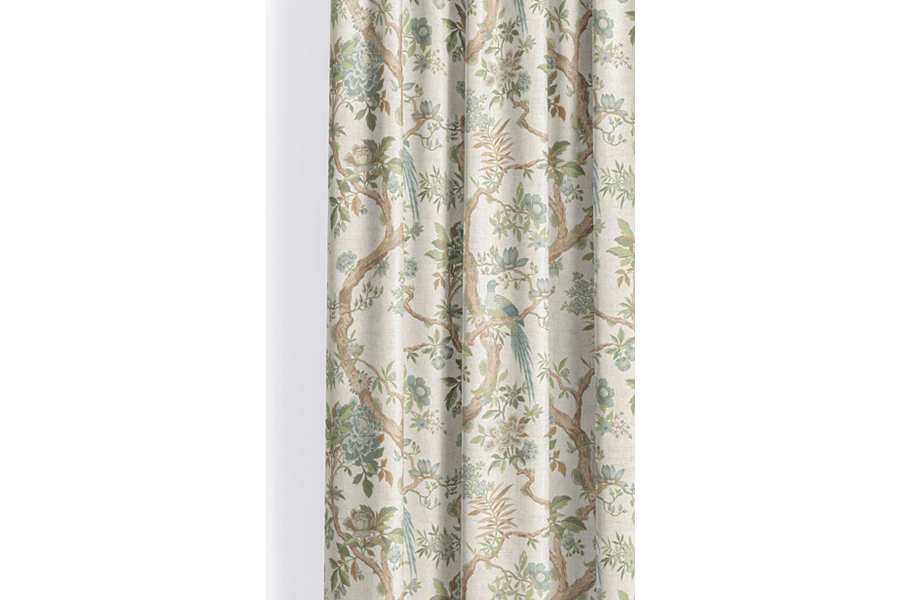
Image Source: sewndrapesandshades.com
Small apartments don’t give you the luxury of getting things “almost right.” Every decision sits in plain view, and even small missteps—an overly heavy curtain, a bulky blind, a sharp colour contrast—can make the room feel tighter than it actually is.
That’s why window treatments in compact spaces need a different approach. You’re not just dressing a window. You’re shaping how the room feels—how light moves, how tall the ceilings appear, how wide the walls read.
The right treatment doesn’t add to the space. It quietly expands it.
Let Light Do the Heavy Lifting
In a small apartment, light is doing most of the work. It’s what creates openness, what softens edges, what keeps the room from feeling closed in.
So the first decision isn’t about fabric or style—it’s about how much light you’re willing to lose.
Heavy, opaque treatments tend to shrink a room because they interrupt that flow. They create hard boundaries where you actually want continuity. Lighter materials, on the other hand, allow light to pass through and spread more evenly, which makes the space feel calmer and more open.
This doesn’t mean everything has to be sheer, but it does mean you should think twice before defaulting to anything dense or overly dark.
Sheer Curtains: Softness Without Weight
If there’s one treatment that consistently works in small spaces, it’s sheer curtains.
They soften the window without defining it too sharply. Instead of creating a strong visual frame, they blur the edges slightly, which helps the wall feel more continuous. That continuity is what makes the room feel larger.
There’s also something about the way sheer fabric handles light. It doesn’t just let light in—it diffuses it, making the entire room feel more even and less contrast-heavy.
In living rooms or studio layouts, where maintaining brightness throughout the day matters, this can make a noticeable difference. The space feels active without feeling exposed.
The key is to keep them simple. Once the fabric becomes too stiff, too patterned, or too decorative, you lose the effect.
When Curtains Feel Like Too Much
There are moments where even the lightest curtain starts to feel intrusive. This usually happens in tighter layouts—windows tucked behind furniture, narrow walls, or rooms where circulation space is limited.
In those cases, pulling everything back often works better.
A treatment that sits close to the window, rather than extending into the room, like custom roman shades or blinds, keeps the wall clear and the space easier to read. It removes visual interruption instead of adding to it.
This is less about style and more about spatial clarity. When the wall isn’t broken up by fabric, the room feels simpler—and that simplicity reads as space.
A More Contained Approach
For rooms that still need a bit of softness but can’t accommodate full curtains, a more contained treatment can strike the right balance.
Something that stays within the window frame keeps the surrounding wall free, which is particularly useful in smaller bedrooms or areas where furniture sits close to the window. At the same time, it still adds a layer of texture and control that a bare window lacks.
What matters here is restraint. Too much fabric, or folds that feel overly full, can quickly defeat the purpose. The goal is to add presence without adding volume.
Using Curtains to Stretch the Room
Curtains aren’t off the table in small apartments—but they need to be used deliberately.
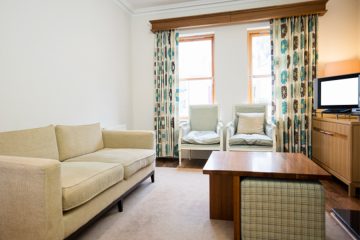
When hung correctly, custom curtains can actually make a room feel larger. Mounting them higher than the window and extending them beyond its width draws the eye upward and outward. The window feels bigger, and the wall feels taller.
But this only works when it’s done properly. Curtains that are too short, too narrow, or awkwardly placed tend to emphasise the actual size of the window instead of disguising it.
So this isn’t about adding curtains for the sake of it. It’s about using them to create better proportions.
Layering Without Overcrowding
Layering can be useful, but in a small space it has to be handled carefully.
A light outer layer paired with a more functional inner treatment can give you flexibility—softness during the day, privacy when needed—without making the window feel heavy.
The mistake is combining two elements that both demand attention. That’s when the window starts to feel overworked.
A good rule to follow is that one layer should always recede. It should do its job quietly, without adding visual weight.
Keeping the Palette Under Control
Colour has a way of defining boundaries, and in a small apartment, boundaries are exactly what you want to soften.
Strong contrast around a window can make it feel more contained, which in turn makes the room feel smaller. Softer, closely related tones allow the window to blend into the wall, creating a more continuous surface.
This doesn’t mean everything has to be the same shade, but it does mean avoiding sharp breaks. The more gradual the transition, the more open the space feels.
Texture becomes more useful than colour here. It adds depth without drawing hard lines.
The Details That Add Up
It’s often the smaller decisions that make the biggest difference.
Bulky hardware, overly decorative rods, or visible brackets can add unnecessary weight. In a larger room, you might not notice. In a smaller one, it all accumulates.
Keeping these elements minimal helps maintain clarity. The window treatment should feel integrated, not assembled.
Fit is another detail that’s easy to overlook. When something is slightly off—too short, slightly misaligned—it becomes more obvious because there’s less else to distract from it.
In compact spaces, precision reads as calm.
Final Thought
The best window treatments for small apartments don’t try to stand out.
They don’t add layers for the sake of it, and they don’t compete with the space. Instead, they support what’s already there—light, proportion, and flow.
When they’re right, you don’t really notice them.
You just notice that the room feels easier to be in.


Leave a reply
You must be logged in to post a comment.





If you need some professional or DIY home-related tips? You have clicked the https://www.prettypracticalhome.com/.
Bookmark this blog to get ideas about Home Improvement, Interior Design or Any other Home Improvement project. Keep visiting the blog as we maintain on daily basis.